Matching Equipment to Environment A Home Assessment Case Study for OTs
For occupational therapists and home reablement teams, the case of Di and Stuart, both in their mid to late eighties, illustrates a familiar case: a single, sudden injury threatening to undo decades of independent living, and a couple determined to remain in the home which supports their identity and wellbeing.
When a Single Injury Threatens a Lifetime of Independence
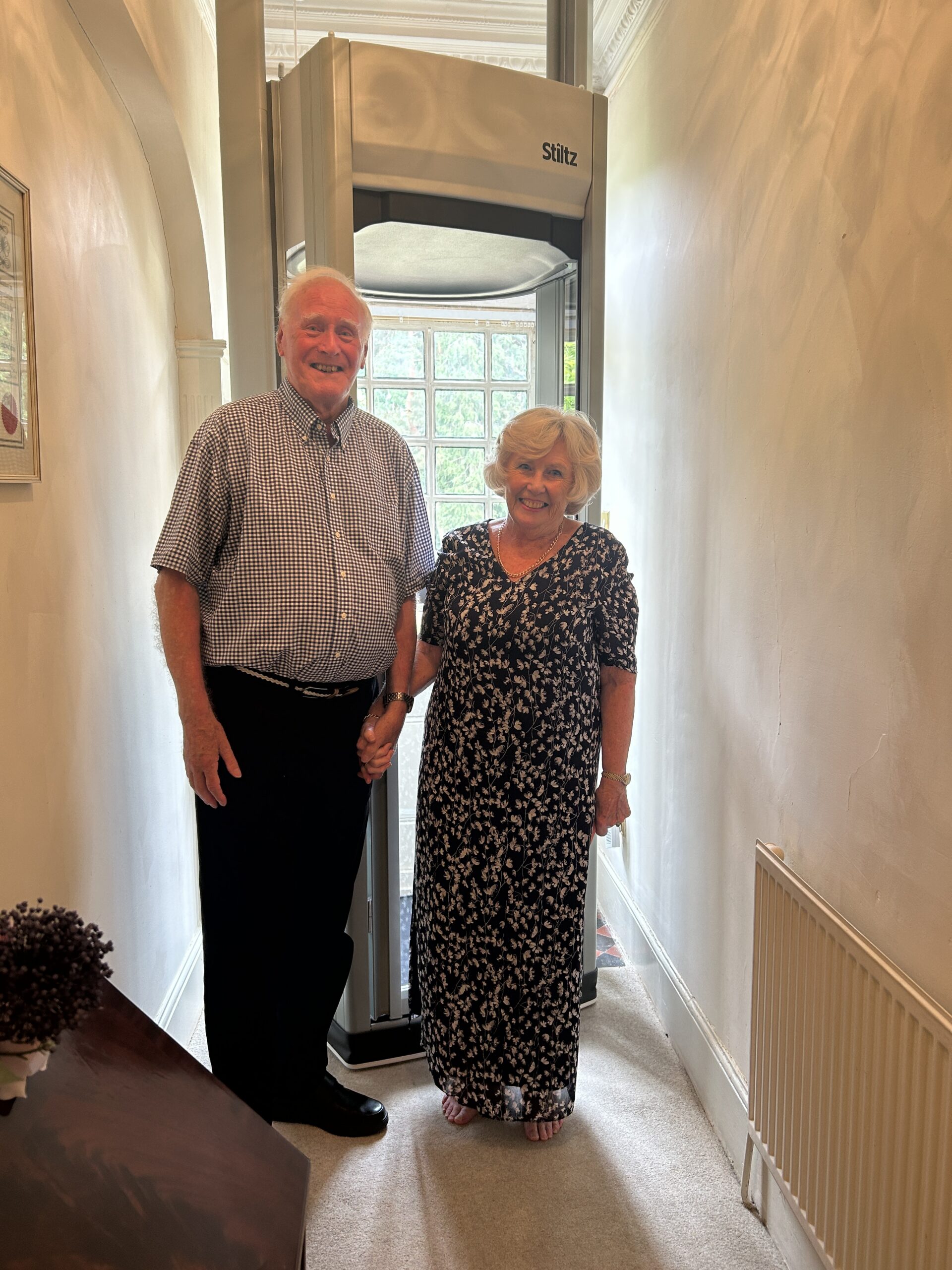
Di and Stuart have lived in their farmhouse conversion near Sevenoaks, Kent, for almost 30 years. During this time, they’ve restored and adapted the property, so it completely works with their own routines. It sits at the centre of their family and social life.
For older people, a long-established home is rarely just a building. It holds routines, identity, and informal support networks built up over years, all of which contribute directly to psychological wellbeing. Reablement and discharge planning increasingly recognise that displacing an older person from this kind of environment carries its own risk profile, distinct from the physical health issue that prompted the conversation in the first place. For Di and Stuart, well-meaning suggestions of a "sensible downsize" didn't reflect the home they had spent three decades shaping, nor the value it held for their continued independence.
This is where the case becomes clinically instructive. Stuart, previously fully mobile and active, ruptured a tendon in his thigh while on holiday. His mobility changed overnight. Stairs, previously an afterthought, became a daily barrier, and the couple were faced with a familiar reablement question: how to preserve safe, independent access to every part of the home, without forcing a move that would carry its own health and wellbeing costs.
This is precisely the pattern OTs are trained to anticipate. In later life, a comparatively minor or single-site musculoskeletal injury can trigger a rapid, disproportionate loss of functional independence, particularly where stairs are the only route between key living spaces. Early, well-matched environmental adaptation is what prevents that single injury from cascading into permanent loss of access to the home.
Assessing the Right Solution
A stairlift was quickly ruled out. The couple's concern wasn't function alone, but how a stairlift at the front door would sit within a home they had carefully preserved, a reminder that adaptations are assessed by patients on aesthetic and psychological grounds as well as practical ones. This is a recurring finding in home adaptation research: solutions that visibly alter the character of a home can affect uptake and long-term use, regardless of their functional suitability.
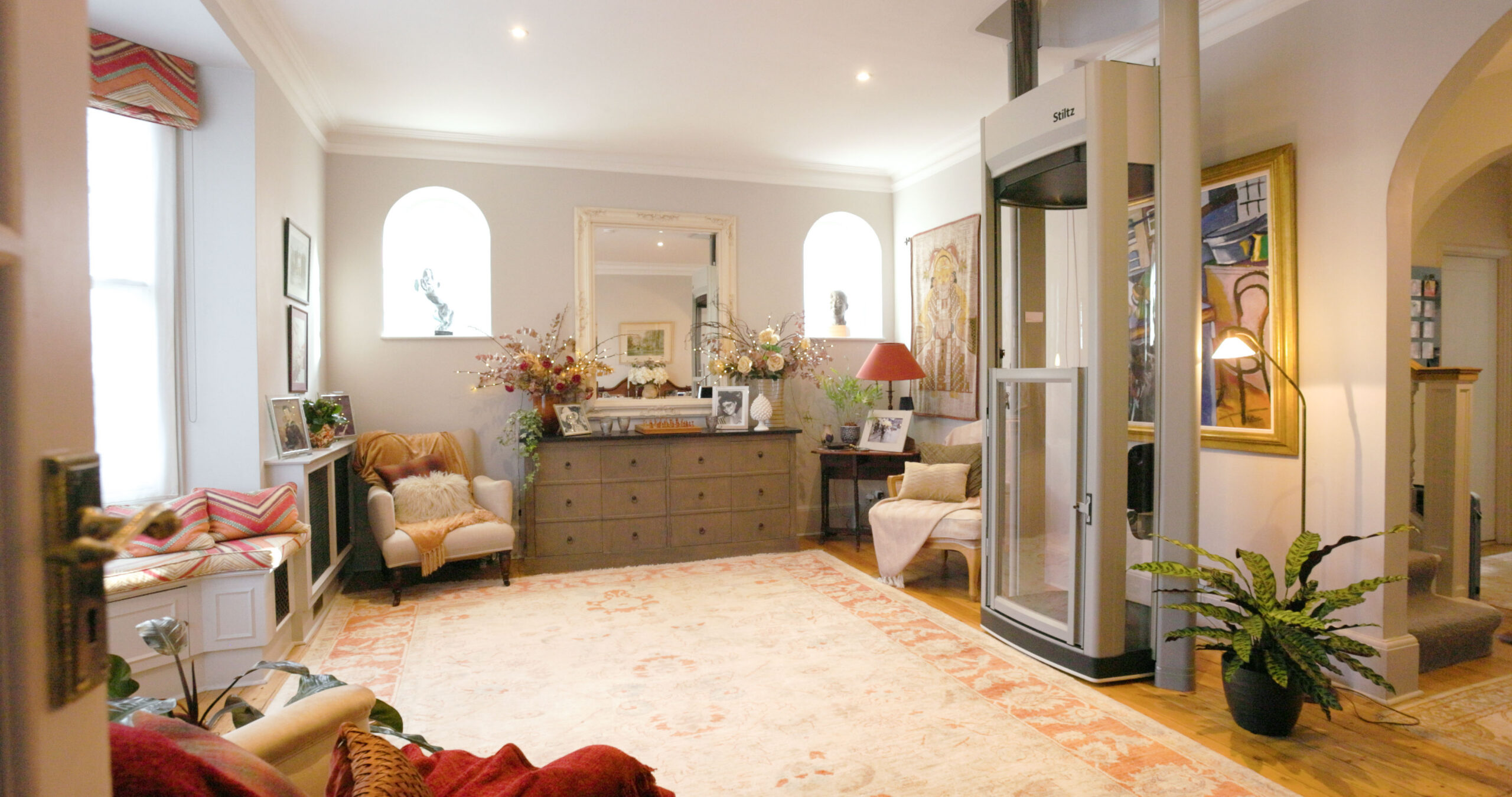
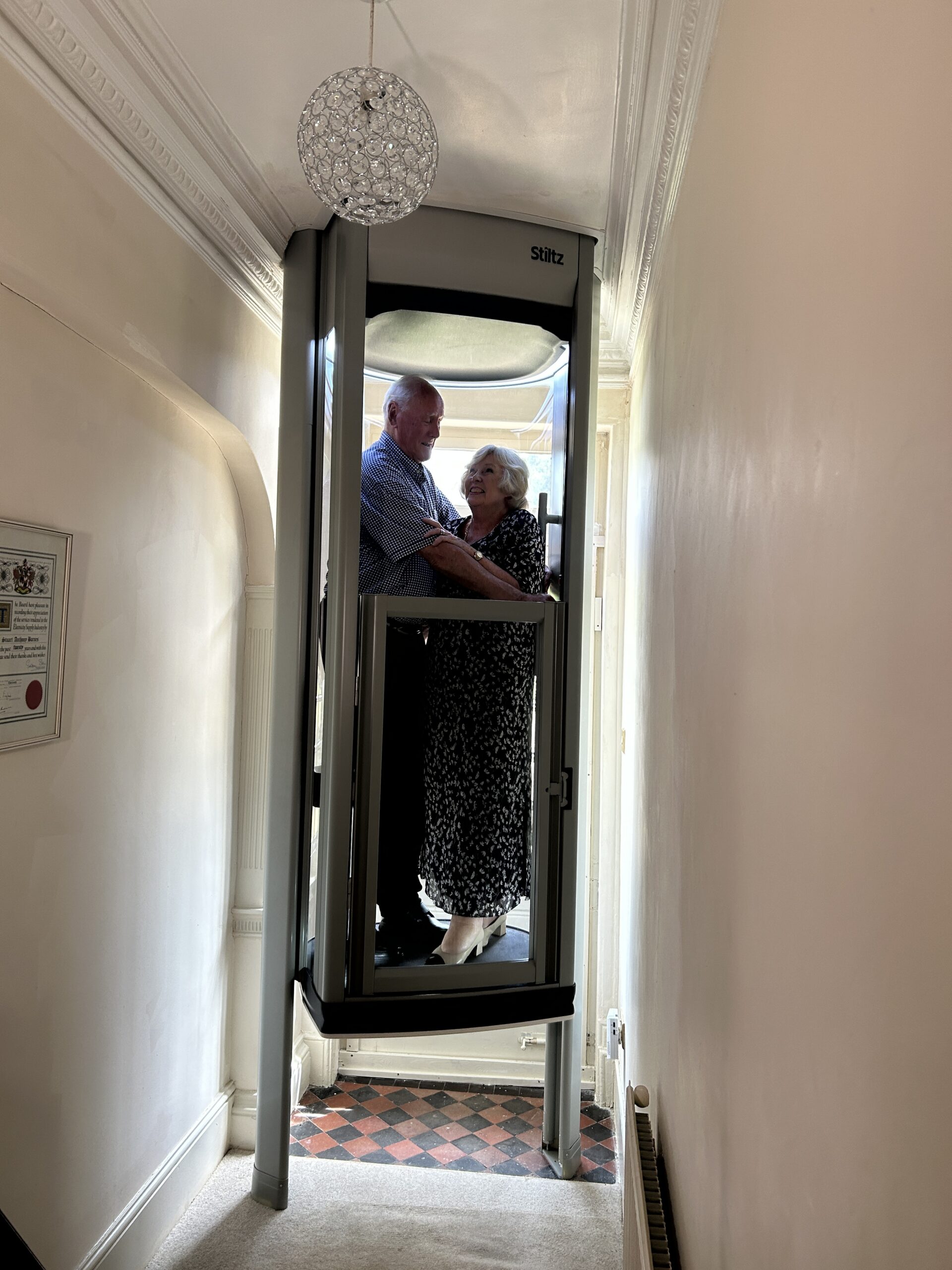
The couple identified Stiltz Homelifts as an alternative and considered a corridor towards the rear of the property, leading directly up to a bedroom with an ensuite, as a promising location. During a home visit, the Homelift Advisor confirmed the space was suitable, and the Duo+ model was identified as the appropriate fit for the location, a decision-making process that maps closely onto the environmental assessments’ OTs conduct as part of home visits.
"They were marvellous. Every member of staff was friendly, excellent, and professional." Stuart explained. As a retired nuclear engineer, he scrutinised the safety specification closely. Battery back-up in the event of a power cut and sensors which detect obstructions or an open door gave him confidence that the product met the same rigour he expected in his own field. Installation in a period property, "with all its idiosyncrasies," went more smoothly than either of them expected and left no structural trace once complete, a consideration for OTs balancing functional need against a patient's resistance to visible or permanent alteration of their home.
Restoring Everyday Function, Not Just Access
In the months since installation, the Stiltz Homelift has become part of the couple's daily rhythm, restoring small routines that carry disproportionate significance for wellbeing and identity. Before his injury, Stuart carried breakfast up to bed each morning; during his recovery, that task fell to Di. With the lift in place, he has resumed it.
"Now we have the lift, I'm back in action; I've no excuses. I can take the tray up again and earn some brownie points."
This detail matters clinically. Reablement outcomes are measured not only in mobility scores but in the return of meaningful, self-directed roles within the household, exactly the kind of activity that risk assessments and goal-setting frameworks are designed to capture. The lift supports the morning tray, moving items between floors, and simply taking the easier option at the end of a demanding day, without altering how the home looks or functions for either occupant.
Supporting Long-Term Independence
For Di and Stuart, the homelift is not simply a convenience but the mechanism that allows them to continue the life they have built, in the home that supports it. Both remain highly active: Stuart as vice chairman of the Westerham U3A, overseeing 47 groups, and Di with keep-fit classes, daily Wordle, a steady stream of visiting family, and a wedding to look forward to next spring. They hope to be travelling again soon.
For professionals advising on home adaptations, this case demonstrates the value of matching the right equipment to the right location early, before a manageable injury is allowed to become the reason an older person loses access to their own home. A well-planned, carefully positioned adaptation, supported by proper assessment and installation expertise, can remove the need for a difficult conversation about moving, and allow a much-loved home to keep supporting the people living in it.
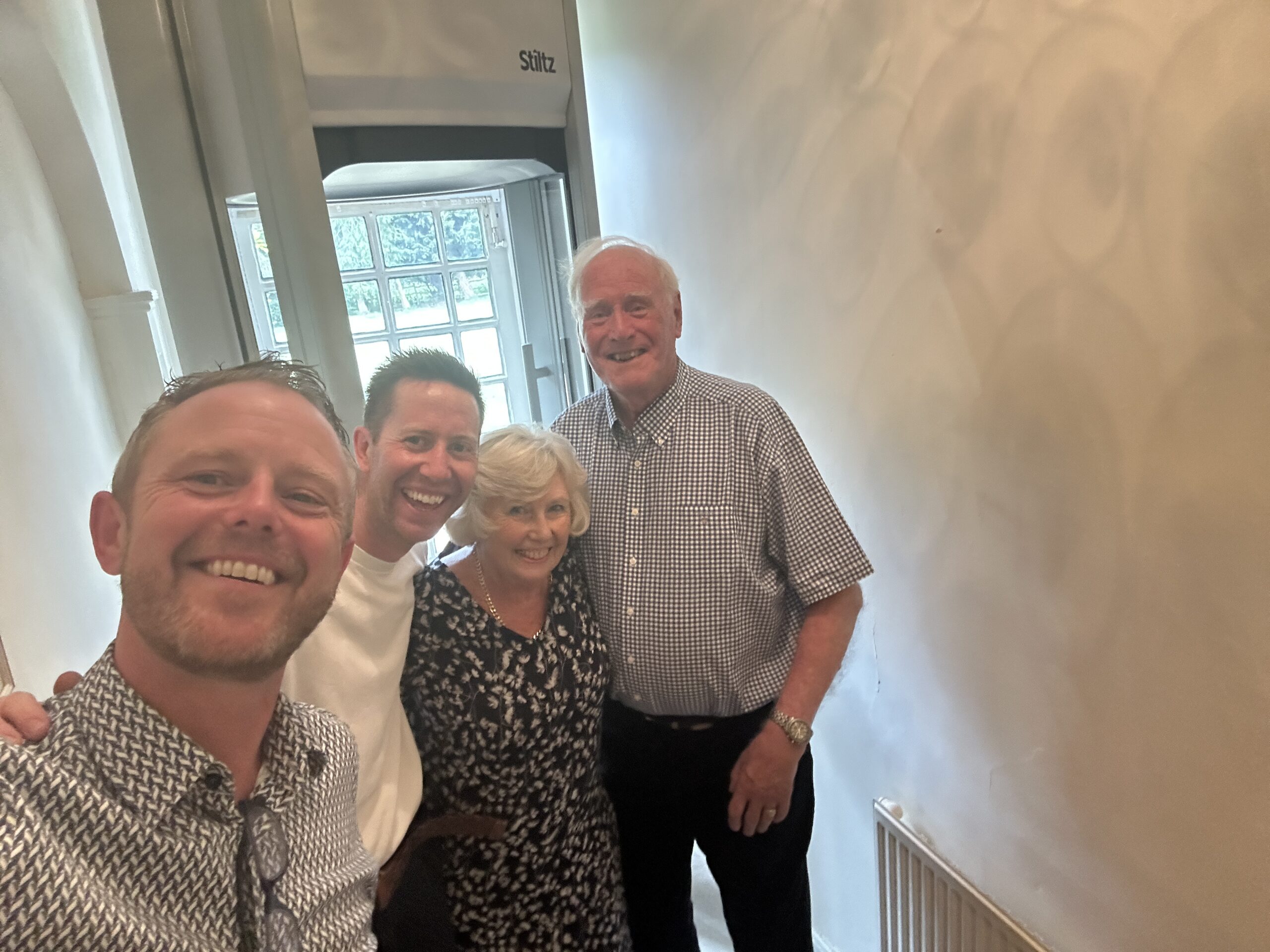
"Our Stiltz lift is silent, compact, beautifully engineered. It keeps the house working for us and keeps us where we belong."
Di Barnes